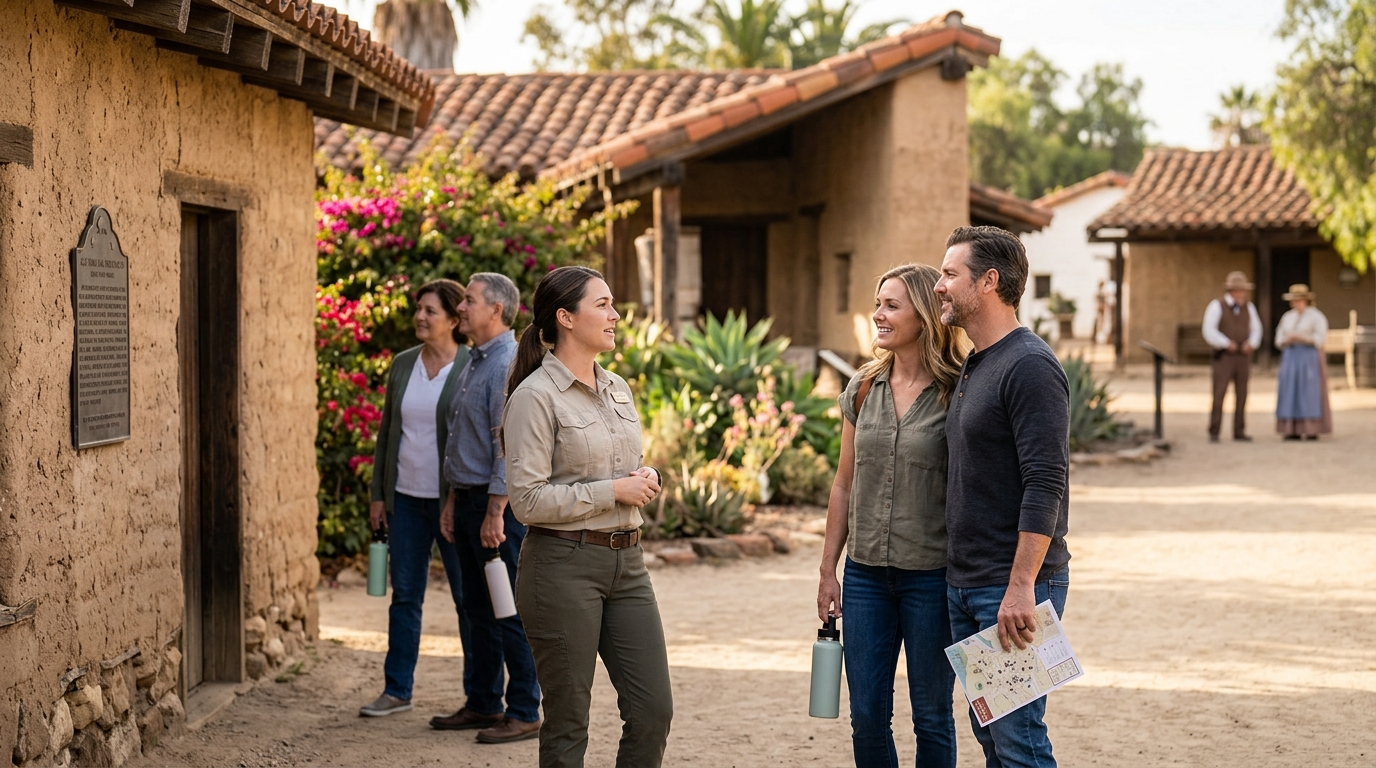
Old Town San Diego State Historic Park serves as the birthplace of California, preserving the region's rich Mexican and early American heritage. According to the California Historical Society, this area was the site of the first Mexican land grant in Alta California, fundamentally shaping the state's cultural identity. A guided walking tour here is not merely a stroll through a museum; it is an immersive journey into the 19th century. Visitors walk past adobe structures that have stood for over 170 years, experiencing the tangible history of the Bear Flag Revolt and the transition of power from Mexico to the United States. This guide details the essential historic sites you will encounter, the stories they hold, and how to maximize your experience with expert local insight.
The Mission San Juan Bautista Connection
While the Mission San Juan Bautista itself is located over 200 miles south in the Central Coast region, its architectural and spiritual influence is deeply felt in Old Town. The Mission style is defined by its thick adobe walls, arched colonnades, and bell towers, which were designed to withstand earthquakes and provide thermal regulation in the hot climate. This architectural legacy is visible in the structures surrounding the Old Town plaza.
Understanding this connection is vital for appreciating the broader context of California's history. The missions were established to spread Christianity and integrate indigenous populations into the Spanish colonial system. For a deeper dive into this specific mission's history, you can explore resources from the Mission San Juan Bautista official site. In Old Town, the narrative shifts to the secularization of these missions and the rise of the ranchero era, where land grants replaced mission control.
The Presidio San Diego de Alcala
The Presidio San Diego de Alcala was the first Spanish military fort in Alta California, founded in 1769. Although the original structure is largely gone, the reconstructed walls and gate at the entrance to the historic park mark the site. This fortification was crucial for protecting the nearby Mission San Diego de Alcala and the harbor. The Presidio is a military fortification designed to protect a town or city, and in this case, it served as the gateway for Spanish colonization.
Walking through the reconstructed gate, you step back to 1774. The site offers exhibits on the daily lives of the soldiers and the indigenous Kumeyaay people who lived in the area. According to the California State Parks system, the Presidio was the first European settlement in Alta California. For more details on the military history of the region, refer to the California State Parks Presidio page. The strategic importance of this location cannot be overstated, as it controlled access to the Pacific coast.
Casa de Estudillo
The Casa de Estudillo is one of the oldest surviving structures in California, built in 1850. It served as the home of the Estudillo family, prominent rancheros who played significant roles in the political and social life of early San Diego. The house is a prime example of Mexican-era architecture, featuring thick adobe walls, wooden beams, and a central courtyard. The Adobe is a building material made from earth and organic materials, dried in the sun or kiln, used extensively in California's early history.
Inside, visitors can view period furniture, artifacts, and documents that tell the story of the family's influence during the transition from Mexican to American rule. The house also houses a museum dedicated to the history of the region. For a comprehensive look at the architectural details, the National Park Service page for Casa de Estudillo provides excellent historical context. The preservation of this home is a testament to the community's commitment to maintaining its heritage.
Jose Arnulfo Huerta Adobe
The Jose Arnulfo Huerta Adobe is another critical historic site within the park. Built in the 1850s, it was the home of Jose Arnulfo Huerta, a Mexican citizen who lived in San Diego after the Mexican-American War. The adobe structure is one of the few remaining examples of residential architecture from that period. The Ranchero era refers to the period in California history when large land grants were given to individuals, leading to the rise of the cattle ranching industry.
Visitors can explore the rooms, which are furnished with period-appropriate items, and learn about the daily life of a ranchero family. The site offers insights into the cultural blend of Mexican and American influences that characterized San Diego during this time. For more information on the ranchero lifestyle, the California Historical Society offers extensive resources. The Huerta Adobe stands as a symbol of the resilience and adaptability of the local population during a period of significant change.
Mexican Heritage Museum
The Mexican Heritage Museum is located in the former home of the Carrillo family, another prominent ranchero family. The museum showcases the history of Mexican California, from the early missions to the statehood of California. The exhibits include artifacts, documents, and art that highlight the contributions of Mexican Americans to the state's development. The Carrillo family was influential in the political and economic life of early San Diego, with members serving as governors and landowners.
The museum also features a courtyard with a fountain, which is a common feature in Mexican architecture. The site offers a deeper understanding of the cultural roots of San Diego and the enduring legacy of its Mexican heritage. For more details on the Carrillo family history, the San Diego History Center provides valuable archives. The museum is a vital resource for understanding the complex history of the region.
Comparing Tour Options
When exploring Old Town San Diego, you have several options for experiencing its historic sites. Each method offers a different perspective on the area's rich history. The table below compares the primary ways to engage with the historic park.
| Tour Type | Best For | Key Benefit | Duration |
|---|---|---|---|
| Guided Walking Tour | History enthusiasts | In-depth storytelling and expert local knowledge | 2-3 hours |
| Segway Tour | Families and groups | Covers more ground with less physical effort | 1.5-2 hours |
| E-Bike Tour | Active explorers | Combines exercise with sightseeing | 2-3 hours |
| Private Custom Tour | Special interest groups | Tailored itinerary and flexible pacing | Flexible |
Choosing the right tour depends on your physical ability, interests, and group size. A guided walking tour offers the most direct connection to the historic sites, while a Segway or E-Bike tour allows you to cover more ground comfortably. For a unique perspective, consider a private tour that can be customized to your specific interests.
Key Takeaways
- Birthplace of California: Old Town San Diego is recognized as the birthplace of California, with significant events occurring here in the 1820s and 1840s.
- Adobe Architecture: The historic sites feature adobe construction, a traditional building method using sun-dried earth bricks.
- Casa de Estudillo: Built in 1850, this is one of the oldest surviving structures in the state.
- Presidio San Diego: The first Spanish military fort in Alta California, founded in 1769.
- Mexican Heritage: The area preserves the culture and history of the Mexican ranchero era.
- Expert Guidance: Tours provide context that self-guided visits often miss, including local legends and architectural details.
- Accessibility: Options like Segway and E-Bike tours make the historic sites accessible to a wider range of visitors.
Frequently Asked Questions
What is the best time of year to visit Old Town San Diego?
The best time to visit is during the spring and fall when the weather is mild. Summer can be hot, and winter can be rainy, but the historic sites are open year-round.
Are the historic sites wheelchair accessible?
Many of the historic sites have been modified for accessibility, but some adobe structures have steps and uneven surfaces. It is recommended to check with the tour provider for specific accessibility needs.
How long does a typical walking tour take?
A standard guided walking tour typically lasts between 2 to 3 hours, allowing enough time to explore the major sites and hear detailed stories.
Can I take photos inside the historic homes?
Yes, photography is generally allowed, but flash is often prohibited to protect the artifacts and interiors. Always follow the guide's instructions.
What is the history of the Bear Flag Revolt?
The Bear Flag Revolt was a short-lived effort by American settlers to create an independent California Republic in 1846. It occurred in Sonoma, but its effects were felt throughout Alta California, including San Diego.
Do you offer private tours for groups?
Yes, we offer custom private tours that can be tailored to your group's interests and schedule. Contact us for more details.
What is the significance of the Presidio?
The Presidio was the first Spanish military fort in Alta California, serving as a defensive structure for the nearby mission and harbor. It marks the beginning of European colonization in the region.
Book Your Experience
Ready to explore the historic sites of Old Town San Diego with expert guidance? Our tours provide a deep dive into the region's rich past, from the Mexican ranchero era to the early American period. Book your tour today and discover the stories that shaped California. For more information or to customize your experience, contact us directly.