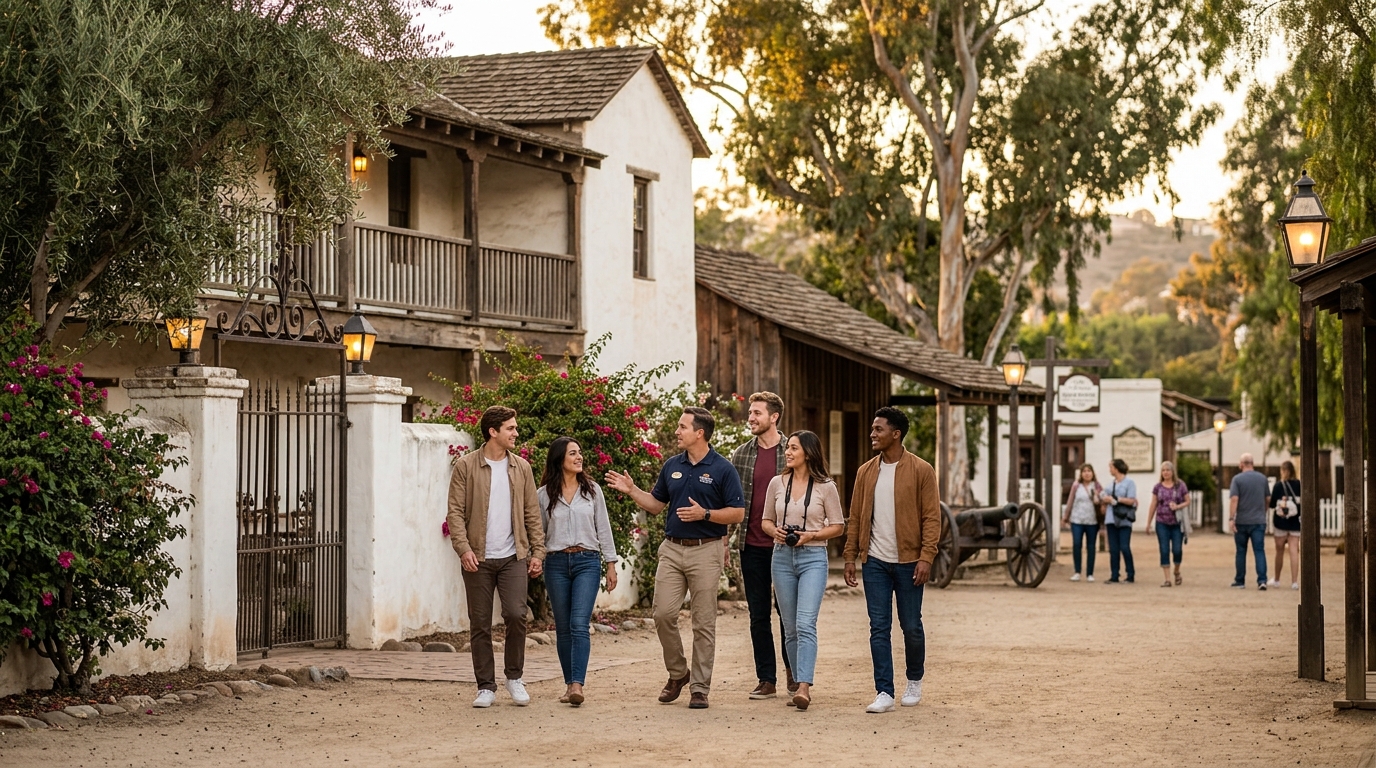
Old Town San Diego State Historic Park serves as the birthplace of California, preserving the region's Mexican and early American heritage. According to the California State Parks system, this 40-acre park attracts millions of visitors annually who seek to understand the foundational history of the state. Exploring these grounds on foot allows travelers to witness the architectural and cultural shifts that defined the 19th century. This guide details the essential historic sites you will encounter during a guided walking tour, ensuring you grasp the full depth of this pivotal location.
Mission San Juan Bautista and the Presidio
The journey through Old Town begins with the foundational structures that established Spanish influence in Alta California. While the famous Mission San Diego de Alcalá is located further north, Old Town itself was the site of the Presidio of San Diego and the subsequent Mission San Diego de Alarcón. Understanding the layout of these early settlements is critical to grasping the region's colonial history.
The Presidio was the first Spanish military fort in Alta California, established in 1769. It served as the administrative and military center for the region. Walking tours typically highlight the reconstructed adobe walls and the strategic placement of the fort overlooking the bay. This site marks the beginning of European colonization in the area. The transition from military outpost to civilian settlement is a key narrative point. Historical records from the National Park Service detail the strategic importance of this location in securing Spanish territorial claims.
Visitors often confuse the Presidio with the Mission. It is important to note that the original Mission was moved multiple times due to flooding and disease. The current Mission San Diego de Alcalá, founded in 1769, is the first of the California missions. However, the Old Town area represents the subsequent civilian pueblo that grew around the Presidio. This distinction is vital for understanding the timeline of settlement. The adobe structures remaining in Old Town reflect the post-Mission, Mexican era architecture.
The Adobe Houses and Residential Life
Old Town San Diego features several reconstructed adobe houses that provide insight into domestic life during the Mexican period. These structures are not merely ruins but carefully preserved examples of 19th-century residential architecture. The use of sun-dried mud bricks, or adobe, was a practical response to the available materials and climate.
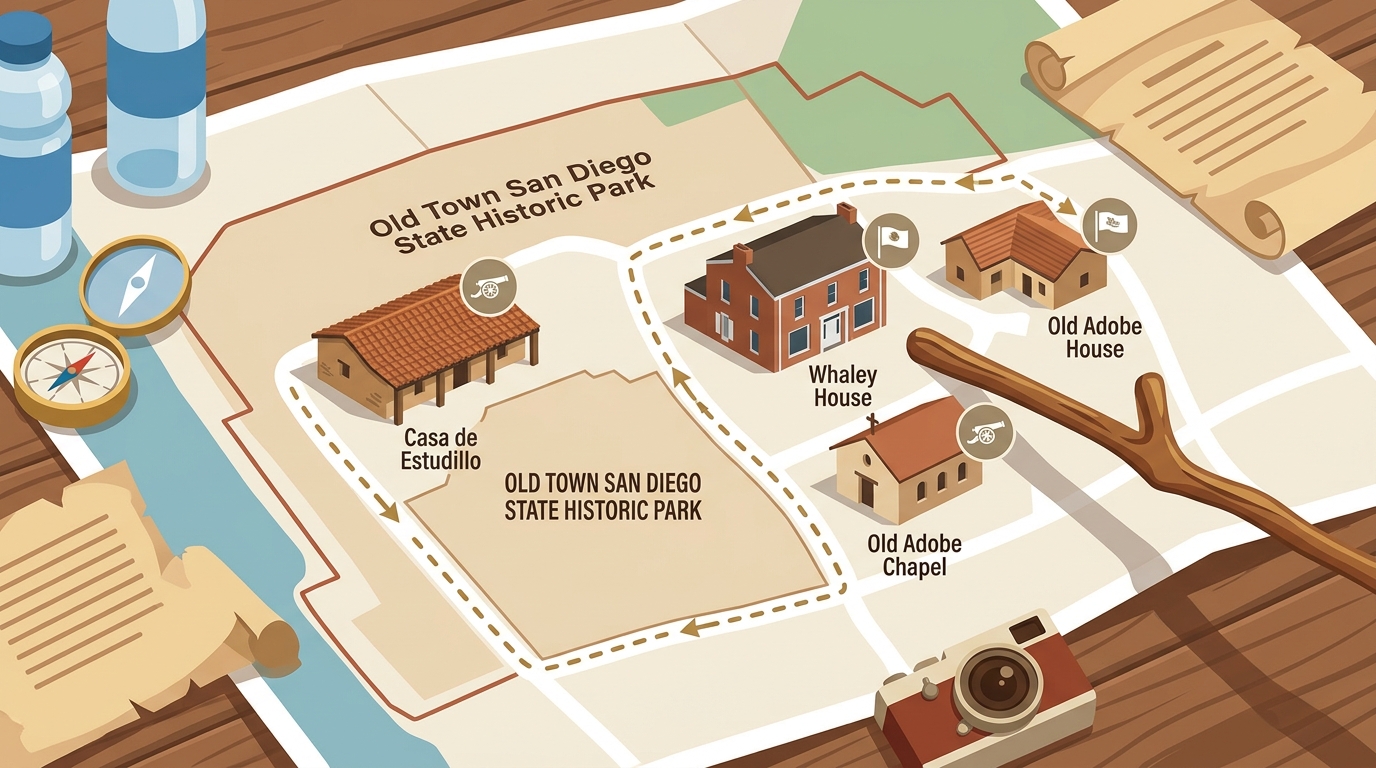
The Casa de Estudillo is one of the oldest surviving structures in California. Built in 1839, it served as the home of the Estudillo family, prominent landowners in the region. The house features thick adobe walls that naturally regulate temperature, keeping interiors cool in summer and warm in winter. Historical studies on Mexican architecture highlight the durability and thermal efficiency of these building techniques. The interior displays period-appropriate furnishings, offering a glimpse into the lifestyle of the Californio elite.
Another significant structure is the Casa de Machado Stewart. This home was built in the 1840s and later owned by Maria Antonia Machado, a wealthy widow who played a key role in the local economy. The house reflects the transition from Mexican to American rule, as Maria Antonia married an American citizen. The architecture blends Mexican and early American styles. Walking tours often discuss the role of women in maintaining the household and managing business affairs during this turbulent period.
The Casa de Machado Stewart also houses a museum that showcases the daily lives of residents. Artifacts include pottery, tools, and personal items that illustrate the blend of indigenous, Spanish, and American influences. The preservation of these homes allows visitors to touch the walls and experience the scale of the rooms. This tactile connection to history is a unique aspect of Old Town tours. The structures stand as testaments to the resilience of the families who lived there.
The Mexican-American War and the Bear Flag
Old Town San Diego is the site of the Battle of San Diego, a minor but significant engagement in the Mexican-American War. This conflict marked the end of Mexican rule in Alta California and the beginning of American control. The events that unfolded here reshaped the political landscape of the entire western United States.
The Battle of San Diego took place in January 1846. A group of American settlers, known as the Bear Flaggers, attempted to seize the Presidio. The Mexican forces, led by José María Flores, repelled the attack. This event highlighted the tensions between the incoming American settlers and the existing Californio population. The Bear Flag Revolt, which occurred shortly after in Sonoma, is more widely known, but the San Diego engagement was a critical precursor.
The Bear Flag itself is a symbol of this brief period of independence. Although the Republic of California lasted only 25 days, its impact was profound. The flag was later adopted as a symbol of the state. Walking tours often explain the symbolism of the bear and the star on the flag. California historical archives provide detailed accounts of the political maneuvers during this time. Understanding this context is essential for appreciating the significance of the Old Town site.
The aftermath of the war led to the Treaty of Guadalupe Hidalgo in 1848. This treaty officially ceded Alta California to the United States. The transition was not smooth, and conflicts continued for years. The Old Town area served as a hub for trade and communication during this period. The presence of American merchants and military personnel changed the demographic makeup of the town. The historic sites preserve the memory of this complex transition.
Cultural Heritage and Traditional Crafts
Beyond the physical structures, Old Town San Diego is a living museum of cultural heritage. The area is known for its vibrant arts and crafts scene, which reflects the region's Mexican and Spanish roots. Artisans demonstrate traditional techniques that have been passed down through generations.
One of the most popular demonstrations is the making of papel picado, or perforated paper. This craft involves cutting intricate designs into brightly colored tissue paper. Papel picado is used in festivals and celebrations throughout Mexico and California. The process requires skill and precision, as the paper is delicate and easily torn. Encyclopedic sources on Mexican folk art describe the cultural significance of these decorations in community gatherings.
Another key craft is the creation of pottery and ceramics. Artisans use traditional methods to shape and fire clay into functional and decorative items. The designs often feature geometric patterns and earth tones that reflect the local landscape. These crafts are not just souvenirs but expressions of cultural identity. Visitors can watch the process and learn about the materials used.
The cultural heritage of Old Town is also preserved through music and dance. Mariachi bands and folk dancers perform regularly, keeping the traditions alive. These performances provide a sensory experience that complements the historical tour. The blend of history and living culture makes Old Town a unique destination. It is a place where the past is not just remembered but actively celebrated.
Tour Options and Accessibility
Exploring Old Town San Diego offers various ways to engage with its history. While walking is the most immersive option, other modes of transport provide different perspectives. Understanding the available options helps visitors choose the best experience for their needs.
| Tour Type | Best For | Key Features | Accessibility |
|---|---|---|---|
| Walking Tours | History enthusiasts | Close-up views of adobes, detailed narratives | Requires moderate mobility |
| Segway Tours | Families and groups | Covers more ground, easy to learn | Requires balance, not wheelchair accessible |
| E-Bike Tours | Active travelers | Scenic routes, electric assistance | Requires basic cycling ability |
| Private Tours | Custom experiences | Tailored itinerary, flexible timing | Varies by vehicle |
Walking tours provide the most direct connection to the historic sites. Guides can point out architectural details that might be missed from a distance. The pace is leisurely, allowing for ample time for photographs and questions. This option is ideal for those who want to immerse themselves in the history.
Segway tours offer a unique way to see the area. They are particularly popular for their ease of use and stability. Guides lead groups through the streets, providing commentary on the history and culture. This option is good for those who want to cover more ground without the physical exertion of walking.
E-bike tours combine exercise with sightseeing. The electric assistance makes it easy to navigate hills and longer distances. These tours often extend beyond Old Town to include nearby attractions like La Jolla. They are perfect for active travelers who want to explore the region's beauty.
Private tours can be customized to specific interests. Whether you want to focus on architecture, military history, or cultural heritage, a private guide can tailor the experience. This option is ideal for groups with specific needs or preferences. It offers flexibility and a personal touch.
Key Takeaways
- Old Town San Diego State Historic Park preserves the birthplace of California, attracting millions of visitors annually to its 40-acre site.
- The Casa de Estudillo, built in 1839, is one of the oldest surviving structures in California and offers insight into Californio life.
- The Battle of San Diego in 1846 was a key event in the Mexican-American War, marking the end of Mexican rule in the region.
- Traditional crafts like papel picado and pottery are demonstrated in Old Town, keeping Mexican and Spanish cultural heritage alive.
- Walking tours provide the most immersive experience, allowing close-up views of adobe architecture and detailed historical narratives.
- Segway and E-Bike tours offer alternative ways to explore the area, combining history with scenic sightseeing.
- Private tours can be customized to focus on specific historical periods or cultural interests for a personalized experience.
Frequently Asked Questions
What is the oldest building in Old Town San Diego?
The Casa de Estudillo, built in 1839, is widely considered the oldest surviving structure in Old Town San Diego. It serves as a museum showcasing the lifestyle of the Californio era.
How long does a walking tour of Old Town take?
A standard walking tour typically lasts between 1.5 to 2 hours. This duration allows for a comprehensive overview of the historic sites, including the adobe houses and the Presidio grounds.
Are the historic sites accessible for wheelchairs?
While the streets and some outdoor areas are accessible, the interior of the historic adobe houses may have steps and narrow doorways that are not wheelchair accessible. It is recommended to check with the tour provider for specific accessibility options.
What is the significance of the Bear Flag in Old Town?
The Bear Flag represents the brief Republic of California during the Bear Flag Revolt of 1846. Old Town was a site of tension and conflict during this period, making it a key location for understanding this historical event.
Can I visit Old Town San Diego for free?
Entry to the Old Town San Diego State Historic Park is free. However, there may be admission fees for specific museums or guided tours. The park itself is open to the public, allowing visitors to explore the grounds and architecture at no cost.
What crafts are demonstrated in Old Town?
Artisans in Old Town demonstrate traditional crafts such as papel picado (perforated paper), pottery making, and leatherwork. These demonstrations provide insight into the cultural heritage of the region.
Is it better to take a walking tour or a Segway tour?
Walking tours offer a more immersive and detailed historical experience, while Segway tours allow you to cover more ground with less physical effort. The choice depends on your physical ability and interest in the depth of the historical narrative.
Book Your Historic Walking Tour
Experience the rich history of Old Town San Diego with a guided tour from Another Side Of San Diego Tours. Our expert guides provide deep insights into the historic sites, from the adobe houses to the Presidio. We offer a variety of tour options, including walking, Segway, and E-Bike tours, to suit your preferences. Contact us today to book your tour and discover the birthplace of California.