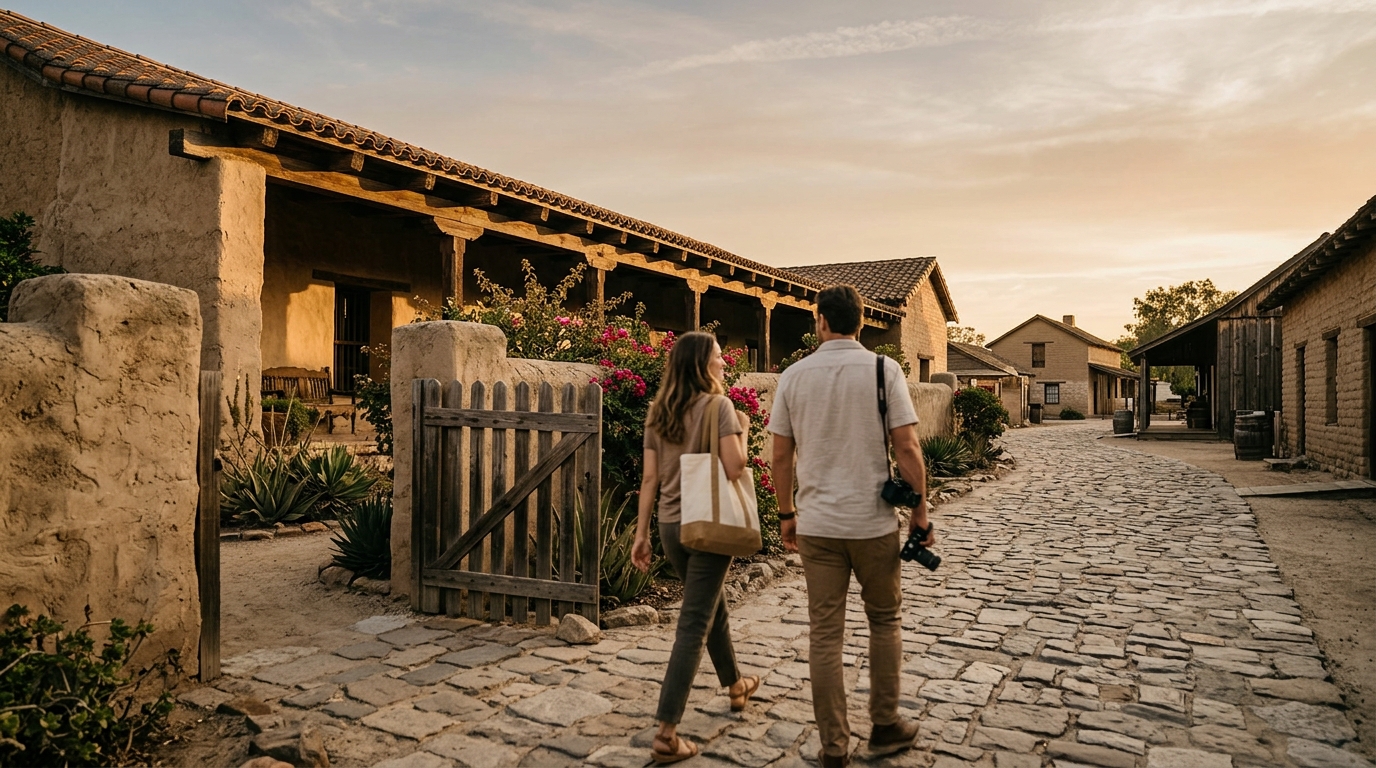
Old Town San Diego State Historic Park serves as the birthplace of California, preserving the region's rich Mexican and early American heritage. According to the California Historical Society, this area was the site of the first major settlement in Alta California, established in 1821. Today, it stands as one of the most visited historic sites in the state, attracting millions of visitors annually who seek to understand the foundational era of the Golden State. Exploring these grounds offers a tangible connection to the past, where adobe walls and cobblestone paths tell stories of war, trade, and cultural exchange.
Contextualizing the Mission Era
To understand Old Town, one must first understand the mission system that preceded it. The Mission San Diego de Alcala is the first of the twenty-one Spanish missions established in California. Founded in 1769 by Father Junipero Serra, the mission was the spiritual and agricultural center of the region for decades. While the current structure is a reconstruction, the original site holds profound historical significance.
The mission served as a hub for cultural and religious conversion, fundamentally altering the demographic and social landscape of the area. It was here that the Spanish colonial influence began to take root, eventually leading to the establishment of the nearby pueblo, or town, which became Old Town San Diego. The transition from mission to pueblo marked a shift from religious control to civil governance, a period that defines the historic park's narrative.
Visitors often begin their journey near the mission grounds to grasp the timeline of events. The proximity of the mission to the presidio highlights the dual strategy of colonization: spiritual conversion and military protection. This strategic placement ensured that the Spanish crown could maintain control over the Pacific coast, a critical component of their imperial ambitions.
The Presidio San Diego de Alcala
The Presidio San Diego de Alcala was the first military fort built in California. Established in 1769, it was designed to protect the mission and the harbor from potential foreign incursions. The fortifications were modest by European standards but crucial for the survival of the early settlers in a rugged and unfamiliar environment.
Today, the reconstructed presidio offers a glimpse into the military life of the 18th century. The stone walls and barracks provide a physical representation of the defensive strategies employed by the Spanish army. The site includes artifacts and interpretive displays that detail the daily routines of the soldiers and their interactions with the local Kumeyaay people.
The presidio's location on a hill overlooking the bay provided a strategic vantage point for monitoring maritime traffic. This oversight was vital for the security of the supply lines that kept the settlement alive. The ruins and reconstructions serve as a reminder of the constant tension between colonization and indigenous resistance that characterized the early years of California history.
Casa de El Campo Santo
Casa de El Campo Santo is one of the oldest structures in Old Town San Diego. Built in the 1850s, this adobe house was originally the residence of Juan Maria Osuna, a prominent local figure. The name translates to "House of the Holy Field," reflecting its proximity to the historic cemetery.
The house has served various purposes throughout its history, including as a restaurant and a private residence. Its preservation is a testament to the community's commitment to maintaining its architectural heritage. The interior features period-appropriate furnishings that illustrate the domestic life of the mid-19th century.
Visitors can explore the rooms to see how the Osuna family lived during a time of significant transition in San Diego. The house stands as a symbol of the Mexican era's influence on the local culture, which persisted even after the American takeover. The adobe construction technique used in its building is a traditional method that has been passed down through generations.
The Adobe House Museum
The Adobe House Museum is another key historic site within the park. This structure, also built in the 1850s, was the home of the Carrillo family, who were influential in the region's politics and economy. The house provides insight into the lifestyle of the Californio elite during the Mexican and early American periods.
The museum features original artifacts and documents that highlight the family's role in the community. The architecture reflects a blend of Mexican and American influences, showcasing the cultural fusion that occurred during this era. The gardens surrounding the house offer a peaceful retreat and a look at the landscaping practices of the time.
Guided tours of the Adobe House often include detailed explanations of the political dynamics of the period. The Carrillo family's interactions with both Mexican and American authorities provide a nuanced view of the power struggles that shaped San Diego's development. The house remains a vital resource for historians and visitors alike.
The Old Town Museum
The Old Town Museum is housed in the former residence of General Antonio Maria Pico. As the last Mexican governor of Alta California, Pico's home is a significant landmark in the region's history. The museum contains a vast collection of artifacts, photographs, and documents related to the history of San Diego.
The exhibits cover a wide range of topics, from the indigenous Kumeyaay culture to the Spanish colonial period and the American era. The museum's library is a valuable resource for researchers and students interested in California history. The building itself is a fine example of Victorian architecture, contrasting with the earlier adobe structures in the park.
Visitors can learn about the daily life of the people who lived in Old Town during its heyday. The museum also hosts special events and lectures that bring the history to life. The collection includes items donated by local families, preserving the personal histories of those who contributed to the community's growth.
Comparing Tour Options
Exploring these historic sites can be done in various ways, each offering a unique perspective. Below is a comparison of the primary methods for experiencing Old Town San Diego.
| Tour Type | Experience Level | Key Features | Best For |
|---|---|---|---|
| Guided Walking Tours | Low | Expert narration, historical context, paced itinerary | First-time visitors, history enthusiasts |
| E-Bike Tours | Moderate | Cover more ground, eco-friendly, scenic views | Families, active travelers |
| Private Custom Tours | Flexible | Tailored itinerary, personalized attention | Groups, special occasions |
| Segway Tours | Low | Easy navigation, unique perspective, fun factor | Couples, tech-savvy tourists |
Key Takeaways
- Mission San Diego de Alcala was founded in 1769, marking the beginning of Spanish colonization in California.
- Presidio San Diego de Alcala served as the primary military defense for the early settlement and mission.
- Casa de El Campo Santo is one of the oldest adobe structures, built in the 1850s by Juan Maria Osuna.
- Adobe House Museum was the home of the Carrillo family, highlighting the Californio elite lifestyle.
- Old Town Museum is located in the home of General Antonio Maria Pico, the last Mexican governor.
- Another Side Of San Diego Tours offers 5-star rated experiences across multiple platforms, including TripAdvisor and Yelp.
- The historic park covers approximately 35 acres, preserving a significant portion of California's early history.
Frequently Asked Questions
What are the main historic sites in Old Town San Diego?
The main sites include the Mission San Diego de Alcala, the Presidio San Diego de Alcala, Casa de El Campo Santo, the Adobe House Museum, and the Old Town Museum. These structures represent the Spanish, Mexican, and early American periods of California history.
How long does a walking tour of Old Town take?
A standard walking tour typically lasts between 1.5 to 2 hours. This duration allows for a comprehensive overview of the key landmarks without feeling rushed. Private tours can be extended based on your interests.
Are the historic sites accessible for wheelchairs?
Many of the historic buildings have been modified to improve accessibility, but some older structures may have limitations due to their original architecture. It is recommended to contact the tour provider in advance to discuss specific needs.
What is the best time of year to visit Old Town?
Spring and fall offer the most pleasant weather for walking tours. Summer can be hot, but the historic sites provide some shade. Winter is mild, making it a comfortable time for outdoor exploration.
Do I need to book tickets in advance?
While walk-ins are often accepted, booking in advance is recommended, especially during peak tourist seasons. This ensures your spot on guided tours and helps manage crowd flow at popular sites.
What is the history of the Adobe House?
The Adobe House was built in the 1850s and served as the residence of the Carrillo family. It now operates as a museum, showcasing artifacts and documents from the Mexican and early American eras.
Can I take a private tour of the historic sites?
Yes, private tours are available and can be customized to focus on specific historical periods or interests. This option provides a more personalized and in-depth experience of Old Town's heritage.
Book Your Tour
Ready to step back in time and explore the birthplace of California? Another Side Of San Diego Tours offers expertly guided experiences that bring history to life. From city tours to private adventures, we ensure a memorable journey through San Diego's past. Contact us today to reserve your spot and discover the historic sites of Old Town with confidence.