Historic Sites Encountered on an Another Side of San Diego Old Town Walking Tour
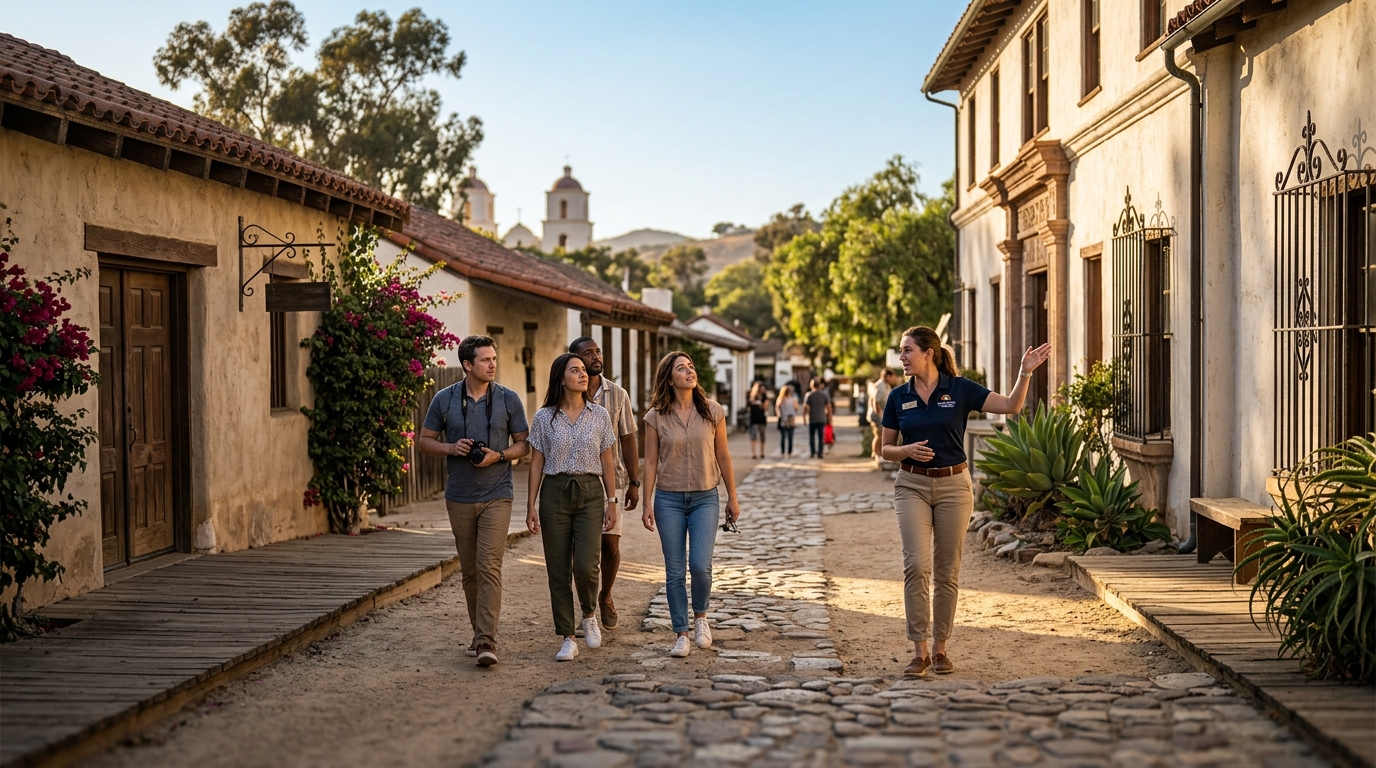
San Diego is widely recognized as the birthplace of California, a title anchored firmly in the cobblestone streets of Old Town. According to historical records, the first European settlement in Alta California was established here in 1769, making this area the epicenter of the state's colonial history. Exploring these grounds offers a tangible connection to the Spanish, Mexican, and early American eras that shaped the region. An Old Town Walking Tour with Another Side of San Diego Tours provides a curated path through these pivotal locations, blending educational depth with the vibrant atmosphere of the present day.
Mission San Diego de Alcalá
The journey through Old Town begins at the most significant religious and historical landmark in the region. Mission San Diego de Alcalá is the first of the twenty-one Spanish missions established in California. Founded in 1769 by Father Junípero Serra, the mission played a critical role in the colonization of the area and the conversion of the indigenous Kumeyaay people.
Visiting the mission allows you to see the original stone foundations and the reconstructed chapel that stands today. The site serves as a museum, housing artifacts that illustrate the daily life and religious practices of the 18th and 19th centuries. Understanding the mission's impact is essential for grasping the complex history of California's development. The architecture reflects the simple, functional style of early Spanish colonial design, emphasizing durability and community.
While the mission is a standalone attraction, it is best experienced as part of a guided narrative. A professional guide can explain the nuanced relationships between the missionaries, the military, and the native populations. This context transforms the site from a static building into a dynamic chapter of American history. For those interested in broader regional history, learning about the company's expertise reveals how deeply they understand these local narratives.
The Presidio of San Diego
Adjacent to the mission lies the site of the Presidio of San Diego, the first military fort in California. Established simultaneously with the mission in 1769, the presidio was designed to protect the mission and the bay from foreign encroachment. The original fortifications were made of adobe and timber, materials that have long since eroded, leaving only the stone foundations visible today.
The Old Town hub area includes the reconstructed presidio walls, which provide a visual representation of the military presence that accompanied the missionaries. The presidio was home to soldiers, their families, and various support staff, creating a small but fortified community. The strategic location offered a natural harbor, which remains a key feature of San Diego's identity as a port city.
Exploring the presidio grounds offers insights into the military history of the West Coast. The layout of the fort reflects the defensive strategies of the Spanish Empire during the colonial period. Guides often highlight the challenges faced by the soldiers, including supply shortages and conflicts with local tribes. This historical depth is often missed by casual visitors but is central to a comprehensive understanding of the area.
The Adobe Houses
Old Town is famous for its collection of adobe buildings, which serve as museums and cultural centers. These structures were built using sun-dried mud bricks, a technique brought by the Spanish from their homeland. The adobe houses represent the residential and administrative life of the Mexican period in California, which followed the Spanish colonial era.
One of the most notable structures is the Casa de Estudillo, a two-story adobe house built in 1845. It is the only remaining private residence from the Mexican era in San Diego. The house provides a glimpse into the lifestyle of the Californio elite, featuring original woodwork, tile floors, and period furniture. The architecture is characterized by thick walls that keep the interior cool in the summer and warm in the winter.
Another significant building is the Casa de Machado Norris, which served as a trading post and residence. The building illustrates the commercial activities that took place in Old Town during the mid-19th century. These adobe structures are not just historical relics but are actively maintained to preserve their structural integrity and historical accuracy. Custom tours can be arranged to focus specifically on these architectural details and the families who lived in them.
The Old Town Canyon Park
Beyond the main plaza, the Old Town Canyon Park offers a natural contrast to the historic buildings. This park preserves a riparian habitat that once supported the local ecosystem before urbanization. The canyon is home to mature trees, including eucalyptus and pepper trees, which provide shade and a serene environment for visitors.
The park is also home to the Old Town Museum, which houses extensive collections of artifacts from the region's history. The museum's exhibits cover the pre-colonial, Spanish, Mexican, and American periods, providing a comprehensive overview of the area's evolution. The natural setting of the park enhances the historical experience, allowing visitors to imagine the landscape as it was in the 18th and 19th centuries.
Walking through the canyon provides a peaceful respite from the bustling plaza. The sound of the creek, which flows through the park, adds to the sensory experience of the tour. Guides often point out the geological features and the native plants that have thrived in the area for centuries. This blend of nature and history is a unique aspect of Old Town that distinguishes it from other historic districts.
Tour Options and Experiences
Another Side of San Diego Tours offers various ways to explore these historic sites. While the walking tour provides a deep dive into Old Town, other options allow for broader exploration of the region. The following table compares the primary tour types available.
| Tour Type | Focus Area | Key Features | Best For |
|---|---|---|---|
| Old Town Walking Tour | Historic Plaza & Adobe Houses | Deep historical context, mission & presidio sites | History enthusiasts & first-time visitors |
| E-Bike Tours | La Jolla & Coastal Areas | Covering more ground, scenic ocean views | Active travelers & photography |
| Segway Tours | Urban & Historic Districts | Easy navigation, balanced speed | Families & mixed mobility groups |
| ATV Tours | Off-Road & Natural Landscapes | Adrenaline, rugged terrain exploration | Adventure seekers & corporate groups |
Each tour type offers a different perspective on San Diego's history and landscape. The walking tour is the most direct way to engage with the physical remnants of the past. The e-bike and segway options allow for a broader geographic scope, connecting Old Town to other historic sites like La Jolla. The ATV tours provide a unique way to explore the natural surroundings that frame the city.
Key Takeaways
- Mission San Diego de Alcalá was founded in 1769, marking the beginning of European settlement in California.
- The Presidio was the first military fort in the state, established to protect the mission and the bay.
- Casa de Estudillo is the only remaining private adobe residence from the Mexican era in San Diego.
- Adobe construction uses sun-dried mud bricks, a technique that provided thermal regulation in the local climate.
- Old Town Canyon Park preserves a natural riparian habitat alongside historical museum exhibits.
- Another Side of San Diego Tours offers 5-star rated experiences across multiple formats, including walking, e-bike, and ATV tours.
- Historical context is enhanced by professional guides who explain the complex relationships between different historical periods.
Frequently Asked Questions
How long does the Old Town Walking Tour take?
The tour typically lasts between 90 minutes and two hours, allowing sufficient time to explore the mission, presidio, and adobe houses in detail.
Are the adobe houses open to the public?
Yes, several adobe houses, including the Casa de Estudillo and the Casa de Machado Norris, operate as museums and are open to visitors during specific hours.
What is the difference between the mission and the presidio?
The mission was a religious center focused on conversion and community building, while the presidio was a military fort designed for defense and protection.
Can I book a private tour for my group?
Yes, private and custom tours are available for groups seeking a more personalized historical experience.
Is the walking tour suitable for children?
The tour is family-friendly and offers educational content that is engaging for older children and adults. The flat terrain of the plaza makes it accessible for most mobility levels.
What should I wear for the tour?
Comfortable walking shoes are recommended. Given San Diego's mild climate, light clothing is appropriate, but a hat and sunscreen are advised for sun protection.
Do you offer tours in other languages?
While English is the primary language, it is best to contact the team directly to inquire about multilingual guide availability for specific dates.
How far in advance should I book?
It is recommended to book at least a few days in advance, especially during peak tourist seasons, to secure your preferred time slot.
Book Your Historical Journey
Exploring the historic sites of Old Town is more than just a sightseeing activity; it is an immersion into the roots of California. By choosing a guided experience with Another Side of San Diego Tours, you ensure that you gain a deep, accurate, and engaging understanding of the past. The combination of expert narration and curated routes makes the history come alive. Contact the team today to reserve your spot and discover the hidden stories behind San Diego's oldest landmarks.