Planning a single day in a sprawling coastal metropolis requires precise logistical coordination. According to the San Diego County Tourism Bureau, the region welcomed over four million visitors annually in recent years, creating dense traffic patterns that demand strategic routing. A well-executed one-day framework eliminates transit friction while maximizing landmark exposure. This guide outlines the most efficient routing strategies, transportation alternatives, and booking protocols to ensure your twenty-four hour window delivers maximum cultural and scenic value.
Why One Day Requires Strategic Planning
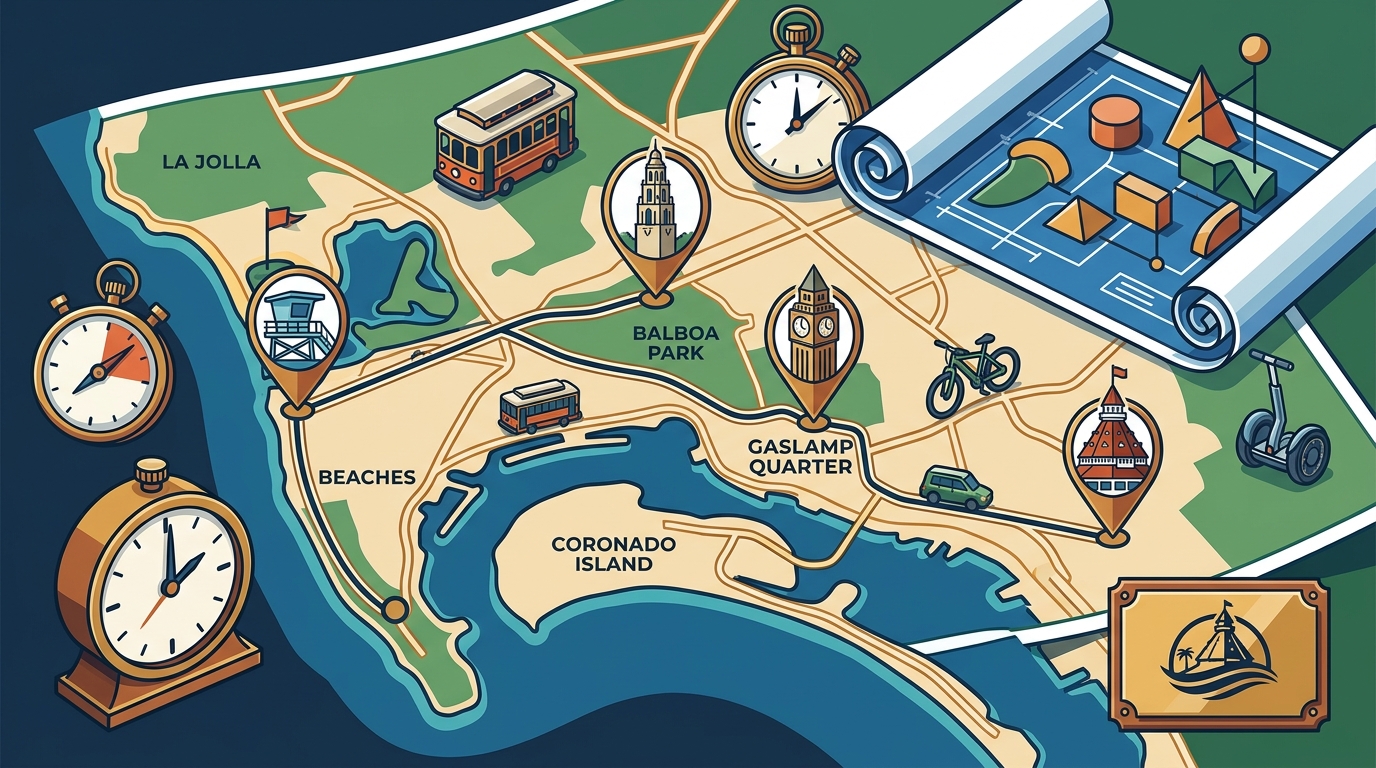
San Diego spans over three hundred square miles of diverse topography. A geographic routing strategy is a systematic approach to sequencing destinations that minimizes backtracking and maximizes daylight exposure. The city features distinct microclimates that shift rapidly from coastal fog to inland heat. Visitors who attempt self-guided exploration without a fixed schedule frequently waste hours navigating unpredictable parking availability. Professional operators utilize proprietary routing algorithms to bypass congestion corridors during peak tourist hours. This operational efficiency directly translates to higher landmark completion rates and reduced driver fatigue. Your itinerary must account for seasonal daylight variations and regional event schedules that temporarily close major thoroughfares.
Top Transportation Methods for Coastal Exploration
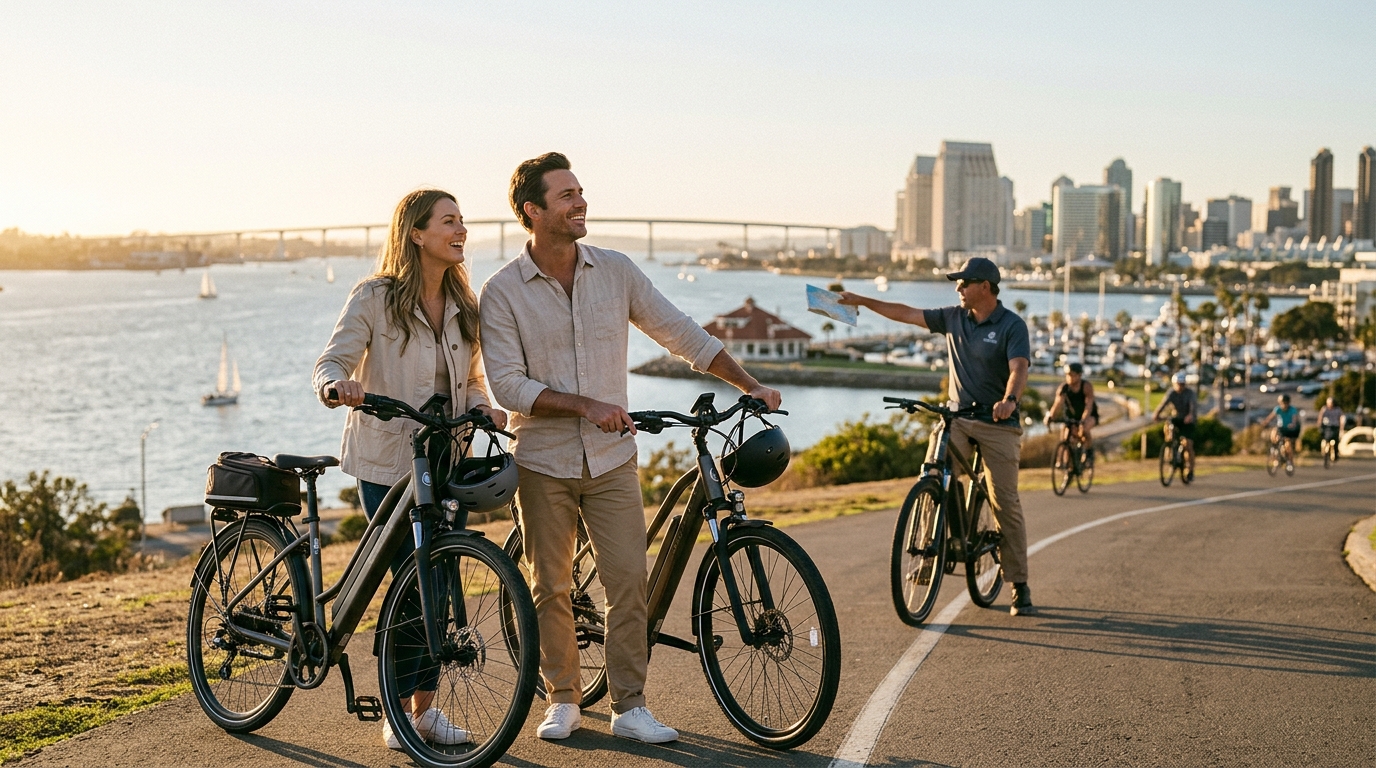
Selecting the appropriate mobility platform dictates your overall experience quality. Modern tour operators offer three primary mobility frameworks that cater to different physical preferences and pacing requirements. Electric bicycle fleets provide moderate cardiovascular engagement while covering extended distances efficiently. Segway platforms deliver zero-emission navigation across paved waterfront promenades and historic districts. Standard sightseeing buses accommodate larger groups while offering narrated historical context. Each platform serves a distinct demographic need. An electric mobility framework is a vehicle-assisted transportation system that reduces physical exertion while maintaining outdoor exposure. Riders can adjust their pace without mechanical interruptions. Segway operators benefit from compact maneuverability through narrow pedestrian zones. Traditional transit vehicles excel at covering maximum square footage with minimal physical demand.
| Mobility Platform | Physical Engagement Level | Optimal Group Size | Primary Use Case |
|---|---|---|---|
| Electric Bicycles | Moderate | Two to eight participants | Coastal bluffs and waterfront promenades |
| Segway Platforms | Low | Four to twelve participants | Historic districts and pedestrian zones |
| Sightseeing Buses | Minimal | Twelve to forty participants | High-density landmark routing |
| Private Vehicles | Customizable | One to twenty participants | Flexible scheduling and premium access |
Curated Itinerary: Morning to Evening Breakdown
A optimized twenty-four hour schedule balances iconic landmarks with local cultural immersion. Morning operations typically begin at waterfront districts to capture optimal lighting conditions for photography. The initial routing sequence prioritizes coastal bluffs, historic maritime zones, and premium dining corridors. Midday transitions shift toward inland cultural institutions and architectural heritage sites. Afternoon segments focus on recreational waterfront activities and scenic overlooks. Evening programming emphasizes illuminated landmarks and culinary district exploration. This chronological sequencing prevents destination overlap and maintains consistent energy levels. A chronological routing sequence is a time-optimized destination order that aligns with natural light conditions and operational business hours. Morning slots capture peak visitor enthusiasm and favorable weather windows. Midday periods accommodate indoor cultural exhibits and climate-controlled environments. Evening segments leverage artificial lighting displays and active nightlife districts. This structured progression ensures comprehensive coverage without logistical bottlenecks.
Private Tours Versus Group Sightseeing Options
Group size and customization requirements directly influence your booking classification. Standard group tours operate on fixed schedules with predetermined routing paths. These programs excel at delivering consistent historical narratives and cost-effective pricing structures. Private excursion packages offer complete itinerary customization and flexible pacing adjustments. Corporate groups frequently select private frameworks to accommodate specialized networking requirements. Independent travelers often prefer private arrangements to access restricted viewpoints and premium dining reservations. Your booking classification should reflect your group size, budget parameters, and desired interaction level. Private arrangements typically command higher per-person pricing but deliver significantly higher satisfaction metrics. Group programs provide excellent value for solo travelers and casual visitors seeking standard landmark coverage. Explore our custom tour packages to compare routing flexibility and pricing tiers.
Custom Team Building and Corporate Day Trips
Corporate event planners require specialized mobility solutions that align with organizational objectives. Modern enterprises prioritize experiential engagement over traditional conference formats. Custom team building programs integrate physical activity, strategic problem solving, and collaborative navigation challenges. These frameworks successfully replace passive presentations with active participation models. Organizations report measurable improvements in cross-departmental communication after completing structured outdoor challenges. A collaborative navigation challenge is a structured outdoor activity that requires group coordination, strategic planning, and shared decision-making to achieve a common destination objective. These programs successfully bridge hierarchical communication gaps while maintaining professional boundaries. Corporate clients frequently request hybrid models that combine sightseeing elements with interactive team exercises. Event coordinators benefit from dedicated logistics managers who handle vendor negotiations, permit acquisition, and contingency planning. This comprehensive support structure eliminates administrative friction and allows participants to focus entirely on engagement. Review our corporate program details for comprehensive pricing and scheduling information.
Key Takeaways
- Strategic routing eliminates transit friction and maximizes landmark exposure.
- Electric mobility frameworks reduce physical exertion while maintaining outdoor exposure.
- Chronological routing sequences align with natural light and business hours.
- Private arrangements command higher pricing but deliver superior satisfaction metrics.
- Corporate programs successfully bridge hierarchical communication gaps.
- Professional operators utilize proprietary routing algorithms to bypass congestion.
- Seasonal daylight variations directly impact optimal scheduling windows.
Frequently Asked Questions
How long does a standard one-day San Diego tour typically last?
Standard operational programs typically span between six and eight hours. This duration allows comprehensive coverage of primary coastal landmarks, cultural institutions, and premium dining corridors without causing participant fatigue.
Can I customize my itinerary to include specific landmarks?
Private excursion packages offer complete itinerary customization. Clients can request specific landmark inclusion, dietary accommodation adjustments, and specialized photography stops.
What is the optimal season for outdoor mobility programs?
Spring and autumn months provide optimal temperature ranges for extended outdoor exposure. These periods minimize weather-related disruptions while maximizing photographic lighting conditions.
Do corporate programs include dedicated logistics support?
Yes, dedicated logistics managers handle vendor negotiations, permit acquisition, and contingency planning. This administrative support eliminates friction and allows participants to focus entirely on engagement.
How do electric bicycles compare to traditional sightseeing buses?
Electric bicycles provide moderate cardiovascular engagement and access to narrow pedestrian zones. Traditional buses cover maximum square footage with minimal physical demand and offer narrated historical context.
What happens if weather conditions disrupt scheduled operations?
Professional operators maintain comprehensive contingency protocols. Programs automatically transition to climate-controlled indoor alternatives or reschedule without financial penalty.
Are private tours suitable for large corporate groups?
Private frameworks successfully accommodate groups ranging from ten to fifty participants. Organizational objectives directly influence routing complexity and activity intensity.
Book Your San Diego Experience Today
Securing your preferred mobility platform requires advance reservation due to high seasonal demand. Professional operators maintain limited daily capacity to preserve experience quality and ensure optimal landmark exposure. Visit our primary booking portal to review available scheduling windows, pricing structures, and group accommodation parameters. Our dedicated reservation specialists will match your specific requirements with the most appropriate mobility framework. Secure your preferred dates today and transform your twenty-four hour window into a comprehensive cultural immersion. Contact our reservation team to finalize your routing parameters and secure premium scheduling priority. Learn more about our luxury travel services and discover why we maintain a five-star rating across multiple review platforms. Visit our company history page to understand our operational milestones and regional expansion strategy.